What to Ask Before a Parent Is Discharged From the Hospital
Discharge usually arrives as a surprise. A doctor stops by in the morning, says the word “home,” and within a few hours you're being handed paperwork in a hallway while someone else waits for the bed.
That speed is the problem. Returning to the hospital within a few weeks is common after a stay, and the causes are rarely mysterious — a medication change nobody explained, a follow-up appointment that was never booked, equipment that wasn't at the house, or a family that didn't know which symptoms meant “call now.”
You can prevent most of that with a conversation before you leave the building. Here's what to ask.
Start with the medication list — every time
Medications change more during a hospital stay than at any other time. Doses get adjusted, drugs get stopped, new ones get added, and hospital brands differ from what's in the cabinet at home.
Ask about medications
- Which medications are new, and what is each one for?
- Which of her usual medications should she STOP taking?
- Which doses changed from what she was taking before?
- Are any of these the same drug under a different name?
- Which prescriptions do I need to fill today, before the pharmacy closes?
Find out exactly who to call — and when
At 9pm on a Sunday, “call the doctor” isn't an instruction. Get names and numbers written down.
Ask about contacts
- Who do I call during office hours with a question?
- Who do I call at night or on a weekend?
- What kinds of problems should go to the ER instead of a phone call?
- Is there a nurse line, and what's the number?
Nail down the follow-up appointments
Ask whether follow-up visits are already scheduled or whether you're expected to call. Families routinely assume the hospital booked something when it didn't, and a missed follow-up after a hospitalization is one of the most reliable predictors of ending up back in a hospital bed.
Get the date, the office, and what the visit is for. If nothing is booked, call from the room before you leave — it takes three minutes and you have the paperwork in your hand.
Keep all of this in one place
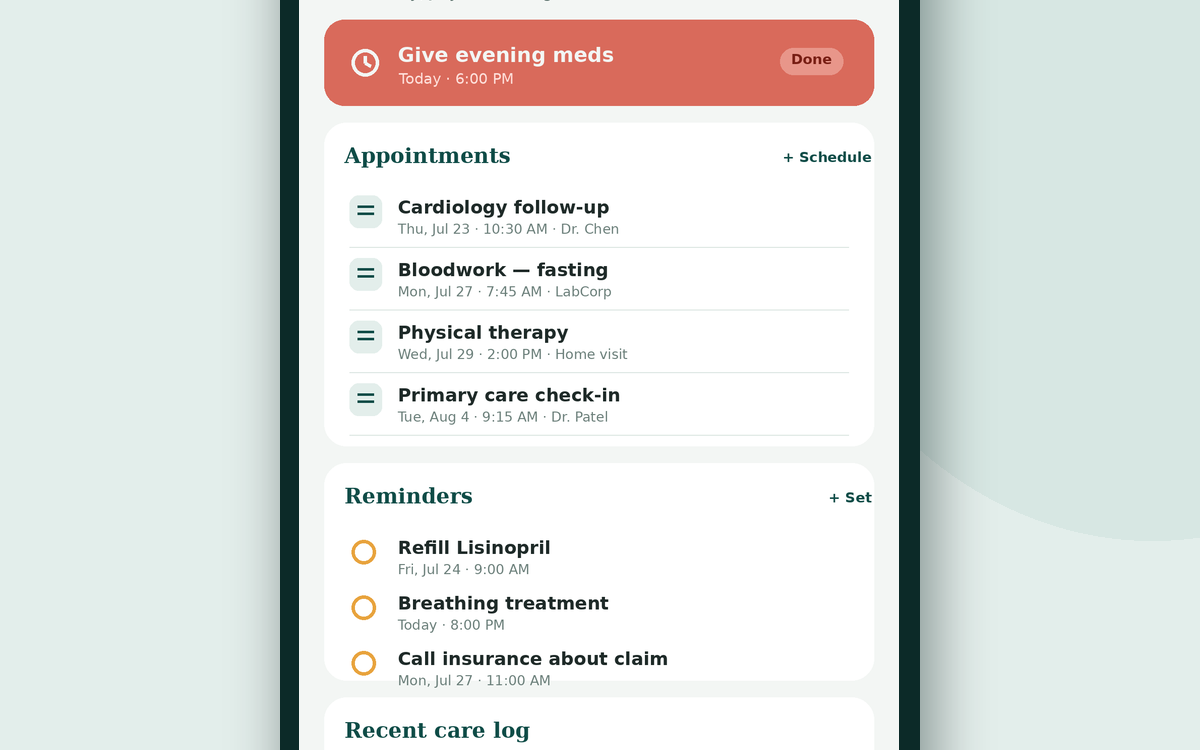
Caregiver Help tracks medications, vitals, appointments, and medical records on your own phone — private, with nothing uploaded to anyone.
See how it works $7.99/month or $19.99 once · works on any phone or computerAsk what the recovery is actually supposed to look like
This is the question families forget, and it's the one that prevents the most 2am panic: what is normal for the next two weeks, and what isn't?
Ask about the road ahead
- What symptoms are expected as part of recovery?
- What symptoms mean I should call the same day?
- What means go straight to the emergency room?
- How much should she be walking or moving, and how soon?
- Are there restrictions on lifting, driving, bathing, or diet?
Make sure home is actually ready
Equipment ordered at discharge doesn't always arrive the same day, and a walker that shows up Tuesday doesn't help someone coming home Sunday.
Ask about home needs
- What equipment is being sent, and when will it arrive?
- Who delivers and sets it up — and who pays for it?
- Is home health nursing or therapy ordered? When is the first visit?
- Is there anything about the house I should change before she gets there?
- Will she need help overnight, and for how long?
If home health is ordered, ask for the agency's name and phone number in writing. If the first visit hasn't been scheduled by the next morning, call them — agencies are usually waiting on paperwork that a phone call unsticks.
Collect these documents before you leave
Paperwork to walk out with
- The written discharge summary and instructions
- The complete new medication list
- Prescriptions, or confirmation they were sent to your pharmacy
- Follow-up appointment details
- Any test results from the stay, and which ones are still pending
- The name of the doctor who managed the stay
The first 48 hours at home
Recovery problems usually announce themselves early. Keep the first two days deliberately simple: fill the prescriptions immediately, rebuild the home medication list from the discharge paperwork, and write down how she's doing twice a day — appetite, breathing, alertness, pain, weight.
That short written record is what turns a vague “she hasn't seemed right since Tuesday” into something a doctor can act on.
The questions you ask in the hallway are the ones that keep you out of the hallway next month.
Stop keeping it all in your head
Medications, vitals, appointments, records, and reminders — organized on one calm screen, made by a caregiver for caregivers.
Try Caregiver Help $7.99/month or $19.99 once · 14-day money-back guaranteeFrequently asked questions
What is the most important question to ask before hospital discharge?
Ask which medications changed — what's new, what stopped, and what doses are different from before. Medication changes made during a stay are the most common cause of problems in the first weeks at home.
Can I refuse a hospital discharge if I don't think my parent is ready?
You can raise concerns, and hospitals have a process for it. Ask to speak with the case manager or discharge planner, explain specifically what you can't manage at home, and ask about your right to appeal the discharge decision. Being concrete about the gap — no equipment, no help overnight, stairs — is far more effective than a general objection.
Who do I contact after a parent comes home from the hospital?
Before you leave, get a daytime number, an after-hours number, and the name of the doctor who managed the stay. If home health is involved, get the agency's number too. Keep all of it in one place you can find quickly.
How soon should a follow-up appointment happen after a hospital stay?
Many conditions call for follow-up within one to two weeks, and some sooner. Ask before you leave — and if nothing has been scheduled, book it while you still have the paperwork in your hand.