Caregiver Burnout: The Signs, and What Actually Helps
Most caregivers don't notice burnout arriving. They notice that they snapped at someone they love, or that they can't remember the last time they enjoyed anything, and they conclude they've become a worse person.
That's not what's happening. Burnout is what occurs when one person carries a job designed for a team, for longer than anyone can sustain, usually while grieving someone who is still alive.
Tiredness or burnout?
Ordinary tiredness improves with rest. Burnout doesn't — you sleep and wake up just as empty. That's the clearest distinction.
Common signs
- Exhaustion that a full night's sleep doesn't touch
- Irritability or anger that surprises you, often at the person you're caring for
- Feeling numb, flat, or detached from things you used to care about
- Withdrawing from friends — declining invitations you'd once have accepted
- Getting sick more often, or new headaches, stomach trouble, or back pain
- Trouble sleeping even when you finally have the chance
- Using more alcohol, food, or scrolling to get through the evening
- A persistent sense that nothing you do is enough
A few of these on a hard week is being human. Most of them, for most of a month, is worth taking seriously.
Why caregivers miss it in themselves
Partly because the decline is gradual, and partly because the role rewards ignoring it. Caregiving is full of small emergencies, and someone who stops to consider their own state can feel like they're being self-indulgent while a person they love needs help.
There's also guilt — a belief that resentment or exhaustion means you don't love them enough. In practice the opposite is closer to the truth: burnout tends to hit hardest in the people doing the most.
You are not a bad caregiver for being tired. Rest is part of the job, not a reward for finishing it.
What actually helps
Respite — real time away, scheduled
Not “when things calm down.” Actual dates on the calendar. Respite might be a family member taking a weekly afternoon, an adult day program, a few hours of paid in-home care, or a short-term stay somewhere so you can take a genuine break.
In the United States, your local Area Agency on Aging is the practical starting point for what exists near you and what's subsidized. The Eldercare Locator (eldercare.acl.gov, 1-800-677-1116) connects you to yours. Many caregivers are surprised at what's available once they ask.
Ask for help in specific, small pieces
“Can you help more with Mom?” is easy to deflect. “Can you sit with her Thursday from two to five?” is a yes-or-no question, and people say yes to it far more often.
Keep a running list of jobs someone else could do — a pharmacy pickup, a grocery order, Saturday morning, a phone call to the insurance company. When someone says “let me know if you need anything,” you'll have an answer ready instead of a polite deflection.
Protect your own medical care
Caregivers cancel their own appointments first. Keep them. If you've been low, flat, or hopeless for weeks, tell your doctor plainly — it's a common and treatable part of this role, not a character failure.
Find people who don't need it explained
A caregiver support group — in person or online — does something friends and family often can't: it removes the need to explain. Hospitals, disease-specific organizations, and the Family Caregiver Alliance all run them, and many are free.
Keep all of this in one place
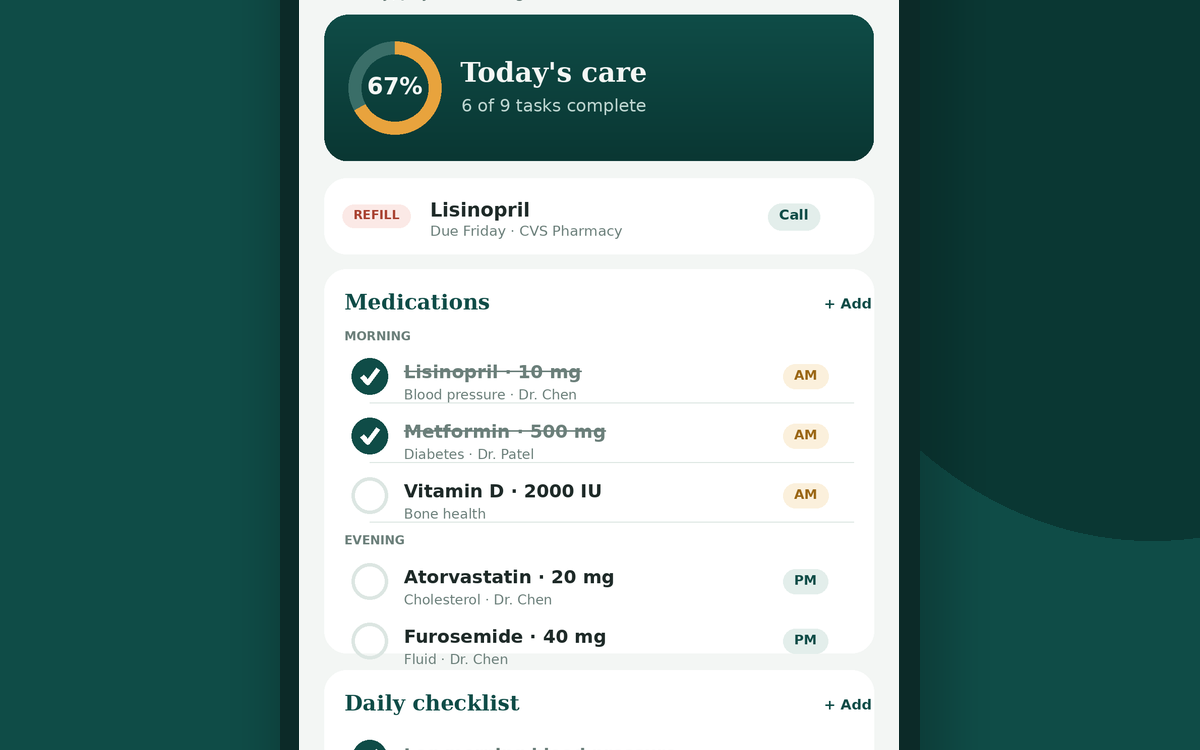
Caregiver Help tracks medications, vitals, appointments, and medical records on your own phone — private, with nothing uploaded to anyone.
See how it works $7.99/month or $19.99 once · works on any phone or computerReduce the mental load, not just the tasks
Much of the exhaustion isn't physical. It's the constant background tracking — doses, refills, appointments, symptoms, insurance calls — that never fully switches off, even when you're doing something else.
Getting that out of your head and into one trusted place genuinely helps. It also means someone else can step in without a forty-minute briefing, which makes asking for help far more possible.
This is why we built Caregiver Help: medications, vitals, appointments, and records in one place on your phone, so the day's care isn't something you have to remember.
What doesn't help
Waiting until you're desperate. By the time you're depleted enough to accept help, you're too depleted to organize it. Ask early.
Comparing yourself to someone else's version of caregiving. Every situation has its own weight, and the person who seems to be coping beautifully may just be further from the hardest part, or better at hiding it.
Trying to be the only one. Sole caregiving is the strongest predictor of burnout there is. Even a small amount of shared load changes the shape of it.
When to get more help
Talk to a doctor or a mental health professional if you've felt hopeless or persistently low for more than two weeks, if you're using alcohol or medication to cope, if you can't sleep even when you have the opportunity, or if you've had a moment of anger toward the person you care for that frightened you.
If you're ever having thoughts of harming yourself, contact a crisis line right away — in the US and Canada you can call or text 988. You deserve support just as much as the person you're caring for.
Caring for yourself isn't taking something away from them. It's what makes the next year possible.
Stop keeping it all in your head
Medications, vitals, appointments, records, and reminders — organized on one calm screen, made by a caregiver for caregivers.
Try Caregiver Help $7.99/month or $19.99 once · 14-day money-back guaranteeFrequently asked questions
What are the warning signs of caregiver burnout?
Exhaustion that sleep doesn't fix, unexpected irritability, feeling numb or detached, withdrawing from friends, getting sick more often, trouble sleeping, and a persistent sense that nothing you do is enough. A few on a hard week is normal; most of them for most of a month is worth acting on.
How do I get a break from caregiving?
Look into respite options through your local Area Agency on Aging — adult day programs, in-home help, and short-term stays. In the US, the Eldercare Locator (eldercare.acl.gov) connects you to your local agency. Also schedule specific hours with family rather than asking for general help.
Is it normal to feel resentment toward the person I care for?
Yes, and it's far more common than caregivers admit to one another. It reflects exhaustion and grief, not a lack of love. If it's frequent or frightening, treat it as a signal that the arrangement needs more support — and talk to someone about it.
Where can family caregivers find support?
Caregiver support groups run by hospitals, disease-specific organizations, and groups like the Family Caregiver Alliance. Your local Area Agency on Aging can point to nearby services. Your own doctor is also a legitimate place to start if you've been feeling low or overwhelmed.